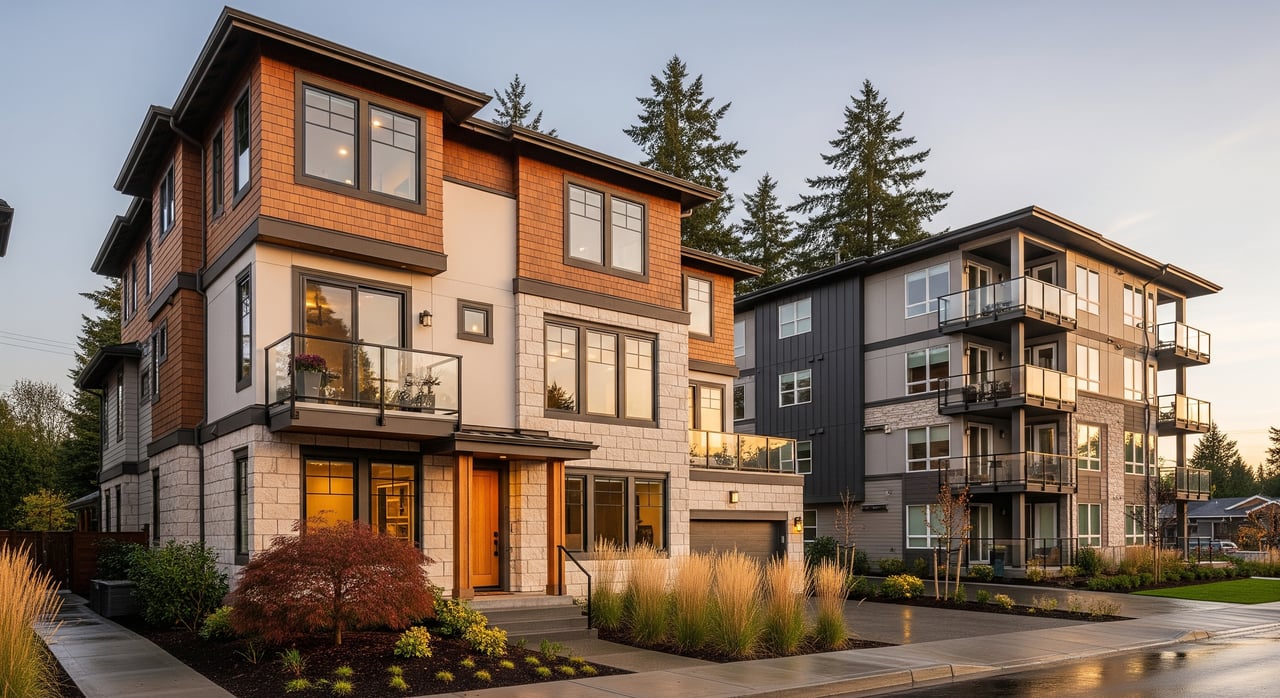
Staring at listings in Redmond and torn between a townhome and a condo? You want the right mix of space, low maintenance, and a commute that makes sense for your day. This guide breaks down how ownership, HOA scope, maintenance, parking, price per square foot, and financing work in Redmond’s key neighborhoods so you can choose with confidence. Let’s dive in.
Townhome vs condo: what you own
Buying a condo usually means you own the interior of your unit plus a shared interest in common areas. In Washington State, condos follow a formal declaration and rules that shape how the building is managed and insured. The HOA typically controls the building exterior and shared systems.
Buying a townhome often means fee-simple ownership of the land and structure, even if walls are attached. Some townhome projects are set up as “townhouse condominiums,” which function like condos in how maintenance and rules are handled. Always confirm the legal form in the recorded documents because it affects control, insurance, taxes, and lending.
If you prefer more control over your exterior and fewer project-level lending rules, a fee-simple townhome often aligns with that. If you want a lock-and-leave lifestyle with broader HOA coverage, a condo may fit better.
HOA scope and maintenance
Condos typically have broader HOA responsibilities. The association often maintains the roof, exterior, windows, building systems, landscaping, and amenities. That bigger scope can lead to higher monthly dues, which fund routine upkeep and long-term reserves.
Townhome HOAs vary widely. In many cases, the HOA may focus on shared driveways or small common areas, while owners handle their own roof, siding, decks, and private yard space. Some new or luxury townhome communities provide more full-service coverage. The only way to know is to read the CC&Rs and budget.
For any attached home, request the most recent reserve study and funding plan. Thin reserves or deferred maintenance increase the chance of special assessments. The quality of the maintenance plan matters as much as the monthly dues number.
Insurance differences
Condo owners typically carry an HO-6 policy for interiors and personal property, while the HOA master policy covers common elements and sometimes the building shell. The details depend on the declaration and master policy.
Townhome owners with fee-simple ownership usually carry a standard homeowner policy that covers the structure and the interior. Coverage needs can differ a lot from development to development, so review the HOA master policy and deductibles before you write an offer.
Parking and storage in Redmond
Parking can be a tiebreaker. In Overlake and Downtown Redmond, demand for parking is strong given proximity to major employers and transit. Condo buildings may offer assigned or deeded garage stalls, and some have storage lockers. Townhomes more often include private garages and driveways.
In Downtown Redmond, on-street parking can be limited. If you commute by car, verify how many stalls you get, whether they are deeded or assigned, and what the guest parking rules look like. If you need EV charging, ask about existing infrastructure and the process for adding it.
In Marymoor and nearby areas, street parking is usually less constrained, and many townhomes offer garages plus small driveways. Even so, each development sets its own rules, so confirm before you commit.
Price and value drivers
Price per square foot in Redmond depends on age, location, unit type, and amenities. New-construction townhomes near Overlake and Downtown often command premiums thanks to larger layouts, private entries, and attached garages. Older mid-rise condos closer to Downtown can show lower per-square-foot pricing or lower total prices, depending on finishes and building age.
Micro-location matters. Walkability, transit access, proximity to employers, and access to parks can shift values within a small radius. When comparing two properties, factor in commute time, building services, and the future maintenance burden.
Financing and resale considerations
Condos can face stricter lending rules. Lenders often review HOA reserves, insurance coverage, owner occupancy ratios, delinquency rates, and whether there is litigation. Projects that do not meet requirements may limit loan options, especially for FHA or VA buyers.
Fee-simple townhomes are often treated like single-family homes by lenders. That can reduce project-level constraints and broaden financing choices, but you should still verify details with your lender early.
On resale, both condos and townhomes can perform well if the location is strong and the building is healthy. Condos with thin reserves, frequent special assessments, or restrictive rental rules can face a narrower buyer pool. Townhomes can appeal to buyers who want more space and private parking, but total cost of ownership depends on exterior upkeep over time.
Neighborhood fit: Overlake, Downtown, Marymoor
Overlake
If proximity to the Microsoft campus and transit is top priority, Overlake offers both mid-rise condos and modern multi-level townhomes. Newer townhomes here often include private garages and contemporary layouts. Condos can deliver lower maintenance and amenity access. Confirm parking rights and any transit or shuttle access near the development.
Downtown Redmond
Downtown emphasizes walkability to restaurants, shops, and services. You will find more condo options, often in low- to mid-rise buildings with amenity packages. In-fill townhomes also exist and can feel quieter with private outdoor space. With tighter parking, review assigned stall counts and guest policies closely if you plan to keep multiple vehicles.
Marymoor and Perrigo area
Close to Marymoor Park, you will see a mix of townhomes and low-rise condos. Townhomes with yards and garages tend to appeal to buyers who want more room and private outdoor space while staying near recreation. Condos near the park work well for those who prefer low maintenance and quick access to trails and events. Street parking is often more available, but confirm specifics.
How to choose: a practical framework
- Commute first. Map your daily routes, transit options, and shuttle stops. Let location drive the property type, not the other way around.
- Space needs. If you want more interior square footage, a garage, or a small yard, a townhome often fits. If you prefer amenities and less upkeep, focus on condos.
- Maintenance tolerance. If you want minimal exterior responsibility, a condo with comprehensive HOA coverage is a better match. If you are comfortable budgeting for roof, siding, and exterior upkeep, a townhome may deliver better long-term value.
- Financing realities. If you plan to use FHA or VA financing, verify condo project approval early. A fee-simple townhome often avoids project-level hurdles, but you should still check with your lender.
- Total cost of ownership. Add up five to ten years of HOA dues plus likely assessments for a condo versus exterior replacement costs for a townhome. Use reserves and maintenance histories to guide your assumptions.
What to review before you offer
- HOA financials. Ask for the current budget, balance sheet, and most recent reserve study. Look for healthy reserves and a realistic funding plan.
- Governing docs. Read CC&Rs, bylaws, house rules, and either the condo declaration or the recorded plat. Confirm rental caps, pet policies, noise rules, and enforcement.
- Meeting minutes. Review the past 12 to 24 months of HOA board minutes for hints of upcoming projects, disputes, or assessments.
- Insurance. Get the master policy and note coverage, deductibles, and any recent claims. Align your personal policy with what the HOA does and does not cover.
- Building and systems. For condos, ask about building envelope projects, roof age, windows, elevators, garage conditions, and utility metering. For townhomes, confirm responsibility for roof, siding, decks, gutters, and fencing.
- Parking and storage. Verify the number of stalls, whether they are deeded or assigned, guest parking rules, and storage locker availability. If you need EV charging, confirm current capacity and approval processes.
- Litigation and assessments. Ask about pending or recent special assessments and any active claims or building defects. These can impact loan approval and resale.
Example tradeoffs to consider
- New townhome near Overlake: higher total price, more space, private garage, and fee-simple control. Expect lower HOA dues, but plan for exterior upkeep over time.
- Older condo near Downtown: lower price per square foot or lower total price, strong walkability, and broader HOA coverage. Dues may be higher, especially if the building is planning system upgrades.
Final thoughts
There is no one-size answer in Redmond. If you want more space, private parking, and control, a townhome can be a great long-term fit. If you value low maintenance, amenities, and a simple lock-and-leave lifestyle, a condo may be the better match.
When you are ready to compare real options in Overlake, Downtown Redmond, or near Marymoor, we can help you weigh the details that matter: reserves, scopes of work, parking rights, and financing. Reach out to PBNW Homes to map the best path for your goals.
FAQs
What is the core difference between a condo and a townhome in Redmond?
- Condos usually involve owning the interior plus a shared interest in common areas, while townhomes are often fee-simple ownership of land and structure, though some townhomes are legally condominiums.
Are condo HOA dues usually higher than townhome dues?
- Often yes, because condo HOAs cover exterior elements and building systems; townhome dues may be lower but you need to budget for your own roof and exterior upkeep.
How does financing differ for condos vs townhomes in Redmond?
- Condos may require project approval and strong HOA financials for many loan types, while fee-simple townhomes are often treated like single-family homes with fewer project-level hurdles.
What should I check about parking in Overlake or Downtown Redmond?
- Confirm how many stalls you get, whether they are deeded or assigned, guest parking rules, storage availability, and any EV charging options or installation policies.
Do new townhomes near Overlake appreciate better than older condos downtown?
- Appreciation depends on micro-location, building health, and demand; newer townhomes can command premiums for space and private garages, while older condos may offer value at lower per-square-foot pricing.
What documents should I review before buying a condo in Redmond?
- Ask for the CC&Rs, declaration, bylaws, budget, reserve study, recent board minutes, master insurance policy, and details on any special assessments or litigation.