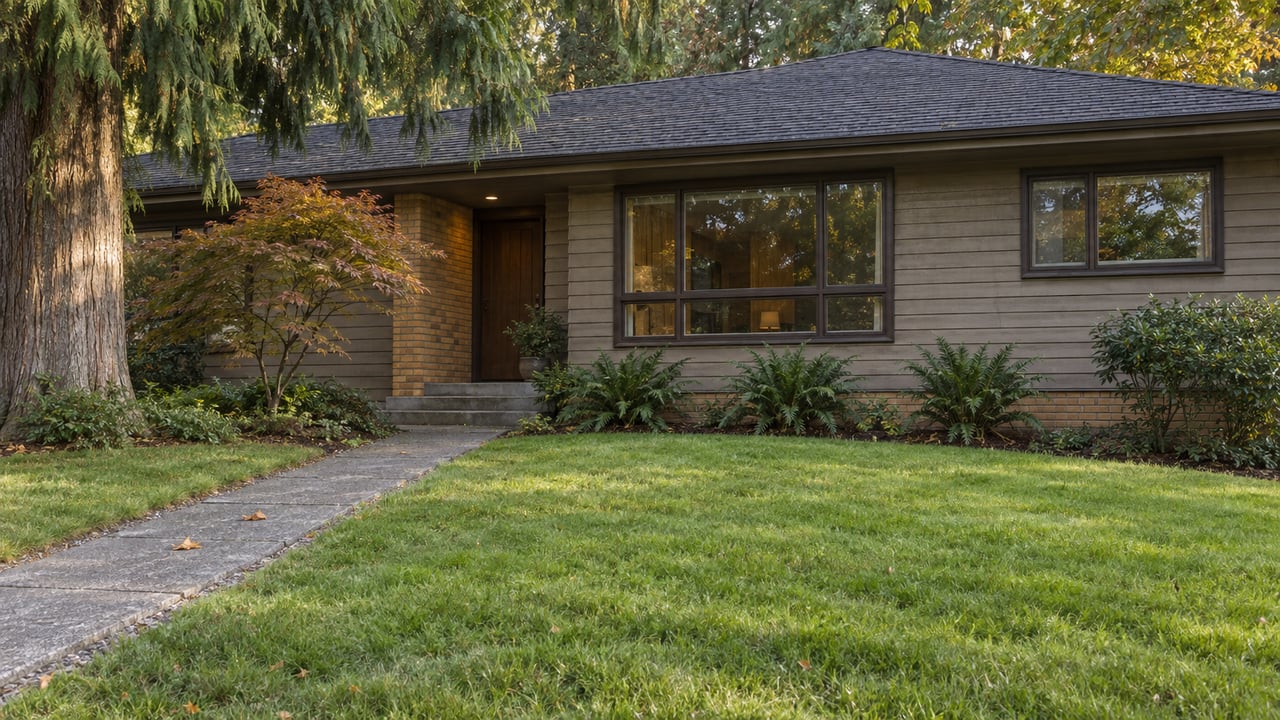
A buyer walks through a well-kept rambler off Ballinger Way. The septic system passed inspection last year. The seller has lived there for two decades without a single wastewater complaint. Nothing on the listing hints at any additional cost.
Then, days before closing, a line item shows up that neither the buyer's pre-approval nor the seller's disclosure statement anticipated: a sewer connection charge, due now, because the sale itself is what triggers it. The seller never had to pay it while living in the house. The buyer has no way to avoid it just by choosing a different lender or a longer closing window. It exists because the property changed hands, full stop.
This isn't a fluke or a title company error. It's written into how Lake Forest Park's own code defines sewer availability, and it explains something buyers and sellers in this city need to understand before they get anywhere near a purchase and sale agreement.
What "available" means under city code
Lake Forest Park's municipal code doesn't ask whether a house is connected to the sewer main. It asks whether one is nearby. Under the city's sewer ordinance, public sewer counts as available whenever it's constructed within 100 feet of a lot line, regardless of whether the home on that lot has ever hooked up to it.
That distinction matters because a lot of Lake Forest Park's housing stock predates a lot of its sewer infrastructure. Many homes kept perfectly functional septic systems even as the city extended sewer mains through nearby streets over the following decades. The septic tank still works. The house still passed its last inspection. Under the code, though, that property is no longer treated as a rural septic lot. It's treated as a sewered lot where the owner has simply chosen not to connect yet.
The tax that separates "on septic" from "on septic, next to a sewer main"
That 100-foot rule isn't just a definition sitting in an ordinance. It has a dollar figure attached. The City of Lake Forest Park says households with a functioning septic system where public sewer is available within 100 feet are subject to the On-Site Wastewater Excise Tax. The 2025 rate was $49.42 per bi-monthly billing period, made up of $22.47 a month plus a 10 percent utility tax.
A property genuinely outside sewer availability doesn't pay this. A property with septic sitting a few dozen feet from a sewer main does, whether or not anyone in the house has thought about it in years. For a buyer comparing two septic properties in Lake Forest Park, that's the first question worth separating out. One carries an ongoing city utility charge. The other doesn't, at least not yet.
The connection charge that moves at closing, not before it
Here's the part that changes the math for anyone actually under contract. According to the city's own shoreline planning documentation, a property with a working septic system is never required to hook up to public sewer just because it becomes available. The connection charge that would come with hooking up gets deferred, sometimes for years, as long as the same owner stays in place.
Ownership change ends that deferral. The moment the property transfers, the connection charge becomes due. It isn't billed annually while someone lives there. It isn't triggered by a septic failure. It's triggered by the sale itself, which means a house that has cost its current owner nothing beyond the excise tax can generate a new closing cost the moment it's sold to someone else.
That's a different kind of risk than a failing drain field. A drain field failure shows up on an inspection report and gets negotiated like any other repair item. A deferred connection charge doesn't show up on a standard septic inspection at all. It shows up in city utility records, and only if someone thinks to check them.
Why this is a live issue right now, not a legacy one
This isn't a rule that only applies to a handful of grandfathered lots from the 1970s. The city has been actively extending sewer service in phases, and the map of who's inside that 100-foot line keeps shifting. Planning documentation for the city put the number of properties historically outside sewer availability at around 275, with an initial extension phase targeting roughly 70 of those properties in the area southwest of the Town Center shopping center.
That work hasn't stopped. As of this spring, the city published a land use notice, file number 20260014, for a low-pressure force main sewer extension running from a point near NE 196th Street and 42nd Avenue out to a cul-de-sac about 250 feet west, with the notice published April 9, 2026 and an appeal window that closed April 23, 2026. A property that sat comfortably outside the 100-foot rule last year can find itself inside it this year, simply because the city ran a new line down the street.
For anyone shopping in Lake Forest Park right now, that means the septic-versus-sewer status of a specific address isn't something to assume based on how the neighborhood looked five years ago. It's worth confirming block by block.
What to confirm before writing an offer
- Ask whether public sewer is available within 100 feet of the lot line, not just whether the house is currently connected. The city's own definition is what controls, not how the listing describes the utilities.
- If sewer is available and the house is still on septic, ask whether the On-Site Wastewater Excise Tax has been billed, and whether a connection charge would come due at this specific transfer.
- Confirm the date of the most recent King County septic inspection and that a current Notice of On-Site Sewage System Operation and Maintenance Requirements is recorded on title. King County requires that inspection before title can transfer, and the notice, filed on NWMLS Form 22U, has to be recorded at the King County Recorder's Office and handed to the buyer before closing.
That last point is about to get stricter. Starting February 1, 2027, Washington Administrative Code 246-272A-0270 requires the property-transfer inspection to be performed by a third-party inspector specifically authorized by the local health officer, tightening what currently allows more flexibility in who can sign off. Anyone under contract on a Lake Forest Park septic property this year should ask which side of that line their inspector falls on, since a report that qualifies today may not automatically satisfy the new standard once it takes effect.
A few questions worth asking directly
Does the excise tax show up on the county assessor's page? No. It's billed as a City of Lake Forest Park utility charge, not a property tax line, so it won't appear next to the assessed value in an online records search. It has to be requested from the city directly.
What if the lot sits just outside the 100-foot line? Then there's no excise tax and no connection charge triggered at sale, at least until the city extends a main closer, which is exactly what's happening in pockets like NE 196th Street this year.
How should you address a connection charge? Ask the city how it will be handled for this property.
None of this makes a septic property in Lake Forest Park a bad buy. Plenty of these homes sit on larger lots, away from the noise of a construction crew laying new sewer main down the street, and the systems themselves are often well maintained. The difference between a septic property that costs nothing extra and one that quietly owes the city money at the exact moment you're trying to close is a matter of a few feet on a map and a phone call to the right department. Getting that answer before writing an offer, rather than after, is the whole game.
If you're weighing a Lake Forest Park property that's still on septic, PBNW Homes can help you get the sewer availability and connection charge questions answered before they become a surprise at the closing table.
This article is general information, not legal, tax or financial advice. Consult a qualified professional about your situation.