Ask any agent who has sold in the 1920s brick buildings north of Pine Street what buyers worry about, and you will hear the same three things: tuckpointing, century-old plumbing, and whether the boiler has another decade left in it. Those are real concerns, and they are priced in. Buyers on Capitol Hill have learned to expect higher dues in a vintage walk-up because the building is doing structural work that a 2015 mid-rise simply doesn't need yet.
What almost nobody is asking about yet is the paperwork. Starting this year, two separate rule changes, one from Washington State and one from the two agencies that back most conventional mortgages, are converging on exactly the kind of building Capitol Hill has in abundance: older, self-managed associations that never had to produce a formal reserve study before. The building's condition hasn't changed. Its ability to get financed has.
The Risk Everyone Already Prices In
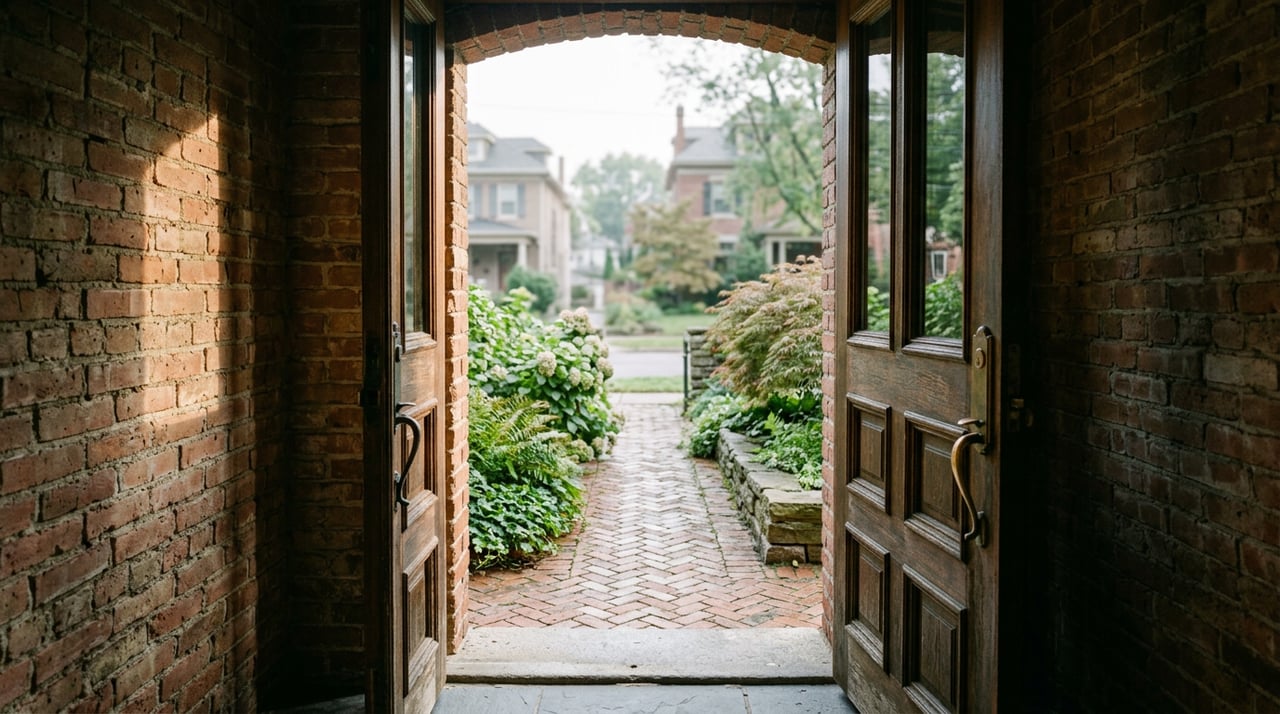
Capitol Hill's housing stock runs older than most of Seattle's central neighborhoods. The 1920s brought an apartment building boom to the area, and buildings like Twin Gables at 16th and Republican, built in 1929, and Rosina Court, a set of nine Tudor-style cottages built in 1928 on the neighborhood's edge toward the Central District, are still standing and still selling. Buyers who tour these buildings already understand the trade. You get coved ceilings, leaded glass, and a courtyard instead of a lobby, and in exchange your HOA dues go toward masonry repair and mechanical systems that a newer building doesn't carry.
That part of the equation is transparent. A good buyer's agent walks a client through the resale certificate, checks whether dues look suspiciously low for a building this age, and flags it as a warning sign rather than a bargain. What has not been transparent, until this year, is whether the building has ever actually done the financial planning that number is supposed to represent.
The Rule That Changed on January 1
For years, Washington condo and HOA law had a loophole. Associations formed after July 1, 2018 were required to follow the Washington Uniform Common Interest Ownership Act's reserve study rules. Everything formed before that date, which includes essentially every building on Capitol Hill built before the last decade, operated under older statutes with looser enforcement. A board could go years without commissioning a real, professional reserve study and face little practical consequence.
That changed with ESSB 5129, signed into law on April 22, 2025. The bill's cross-applicability provisions took effect January 1, 2026, extending the reserve study requirement under RCW 64.90.545 to every common interest community in the state, regardless of when it was formed. A building that opened in 1929 is now held to the same reserve study standard as one that opened in 2023.
In plain terms: the building your grandmother might have lived in no longer gets a pass just because it predates the modern condo statutes. If it has shared walls, a shared roof, or a shared boiler, the board now has to document what those things will cost to fix and when.
The practical requirement is an annual update with a full, on-site inspection by a reserve study professional at least every three years. For a self-managed building that has been quietly deferring this paperwork for decades, that is not a small ask.
The Federal Clock Stacked on Top
If the state law were the only change, boards would have breathing room to catch up. It isn't. On March 18, 2026, Fannie Mae issued Lender Letter LL-2026-03, and Freddie Mac followed with a matching bulletin. Together they tighten the rules that determine whether a conventional mortgage can even be written on a unit in a given building. Three dates matter most:
- August 3, 2026 — The streamlined Limited Review process disappears for established condo projects with more than ten units. Most sales in buildings that size now require a Full Review of the association's budget, reserves, insurance, and delinquency rates before a loan can close.
- July 1, 2026 — Master insurance policies are capped at a $50,000 per-occurrence, per-unit deductible. Associations carrying higher deductibles need buyers to hold individual policies that cover the gap.
- January 4, 2027 — The reserve funding threshold rises from 10 percent to 15 percent of annual budgeted assessment income, based on the loan application date, and the weakest reserve funding option, the one that lets a board plan for the balance to hover near zero, is no longer accepted as an alternative.
A building that fails to meet the new threshold and has no current, compliant reserve study to justify a lower number can be marked ineligible in Fannie Mae's approval system. When that happens, conventional loans stop being available for every unit in that building, not just the one currently for sale. Buyers get pushed toward portfolio loans, which usually carry higher rates and larger down payment requirements, and the pool of people who can afford to buy into that building shrinks. That pressure shows up in resale value for owners who have no plans to sell anytime soon.
Why This Lands Hardest on the Hill's Oldest Buildings
This is where Capitol Hill's architecture becomes the story rather than the backdrop. A courtyard building like Rosina Court, with nine units and no elevator, concierge, or amenity space, was often built and run on the assumption that dues just needed to cover heat, water, and basic upkeep. A reserve study was never part of the culture. The same is true of many of the Anhalt-adjacent buildings scattered through North Capitol Hill and along the edge toward the Central District, where the appeal is period charm rather than modern systems.
None of that makes these buildings a bad investment. It makes them buildings that, as of this year, are legally required to catch up on paperwork they may have skipped for decades, at the exact moment federal lenders are raising the bar on what counts as adequate. A board that treats the new state law as a formality risks discovering, mid-transaction, that its association can no longer support a conventional loan.
What This Means If You're Buying
The resale certificate has always been the place to look. It now needs to answer a sharper set of questions than it did even a year ago.
- Does the building have a current reserve study, completed by a qualified professional with an on-site visual inspection, and is it dated within the last three years?
- Does the association's annual budget reflect the study's highest recommended funding level, or a lower one that could fail the new federal threshold?
- Is the reserve fund held in an account segregated from operating funds, as Washington law requires?
- If the building carries a high master insurance deductible, does it comply with the new cap, and if not, what does that mean for your own HO-6 coverage?
A five-day resale certificate review window is standard in Washington, and this is exactly where that window earns its keep. If the paperwork isn't there yet, that is a conversation for your agent and your lender before you get attached to the unit, not after.
What This Means If You're Selling
If you own in one of Capitol Hill's older buildings and you're thinking about listing before the market moves further into 2027, the smartest thing you can do this fall is find out where your association actually stands. Ask the board directly whether a reserve study has been done since January 1, 2026, and whether the current budget meets the funding level the study recommends. If the answer is no, that is worth solving before a buyer's lender discovers it during underwriting. A building that gets ahead of this keeps its full pool of conventional buyers. One that doesn't may find its own listing quietly losing bidders to a comparable unit two blocks away in a building that did the work.
A Few Questions Worth Asking Directly
Does this apply to co-ops as well as condos? Co-op ownership works differently on paper, since you're buying shares in a corporation rather than real property, but the underlying building still has shared systems and a board managing shared costs. Ask the same reserve and budget questions regardless of the ownership structure.
What if my building already has a strong reserve study? Then you're in a better position than most of your neighbors on the Hill, and it's worth making sure your listing agent highlights that. A well-funded reserve is a selling point buyers increasingly know to look for.
Is this specific to Capitol Hill? The laws apply statewide and the lending rules apply nationally. Capitol Hill simply has a higher concentration of the older, previously exempt buildings that these changes were written for, which is why the effect shows up here first and most visibly.
If you're weighing a purchase or a sale in one of Capitol Hill's older buildings and want a second set of eyes on what the paperwork actually says, PBNW Homes has spent years reading resale certificates for exactly this kind of building. Reach out and let's work through it together before it becomes a surprise at closing.