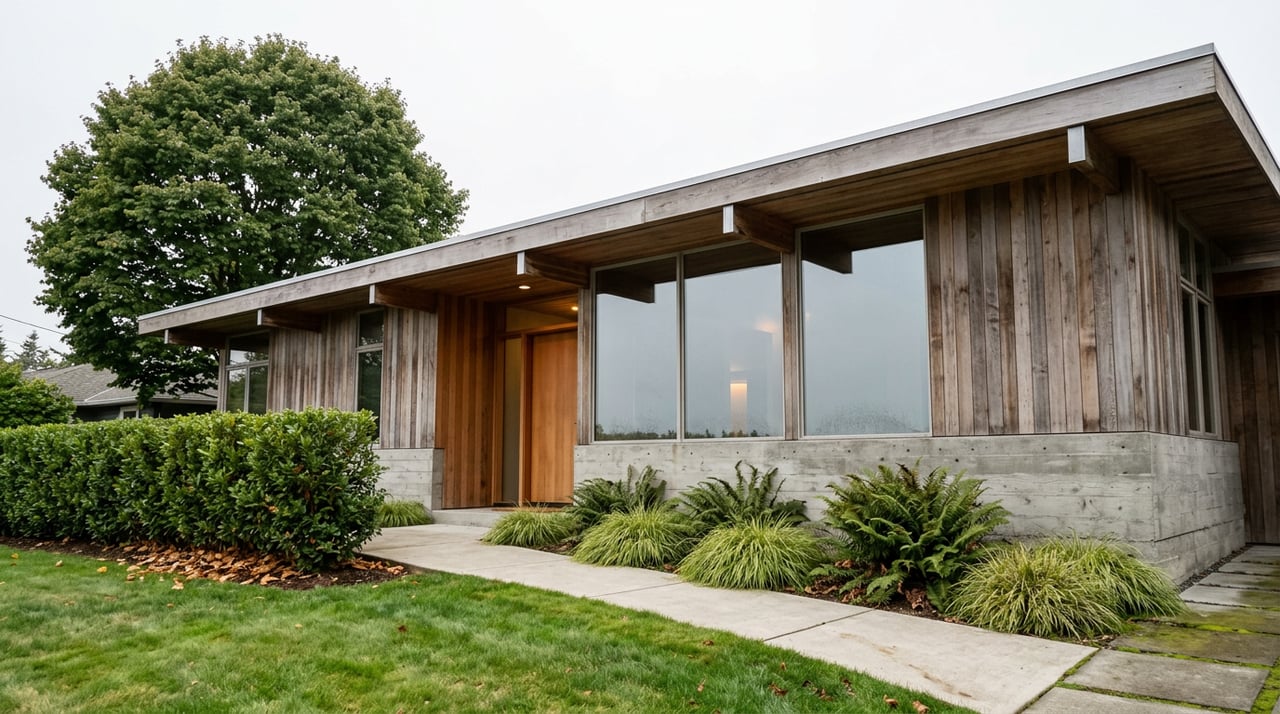
If you have been searching Shoreline, you have probably noticed something fast: two homes that seem close on a map can feel very different in daily life. A few blocks can change your park access, your main commute route, and even your school assignment path. This guide will help you read Shoreline the way local buyers do, so you can sort micro neighborhoods, understand how school zones work, and tour with more confidence. Let’s dive in.
Why micro neighborhoods matter in Shoreline
Shoreline is compact, mostly residential, and shaped by a handful of major corridors that do a lot of work when you are house hunting. The city has about 58,608 residents across 11.7 square miles, along with 413.2 acres of park land and open space and 3.4 miles of Puget Sound shoreline. More than 70% of households are single-family residences, which helps explain why neighborhood feel can shift quickly from block to block.
That is also why citywide averages only tell part of the story. In Shoreline, buyers often compare homes based on where they sit relative to I-5, parks, and the city’s key growth areas. The city’s long-range plan also points to future growth around the 148th Station Area, 185th Street Station Area, Shoreline Place, and Town Center.
Start with Shoreline’s map basics
Shoreline officially supports 14 neighborhood associations: Ballinger, Briarcrest, Echo Lake, Highland Terrace, The Highlands, Hillwood, Innis Arden, Meridian Park, North City, Parkwood, Richmond Beach, Richmond Highlands, Ridgecrest, and Westminster Triangle. Those names matter, but when you are touring, the street grid often matters more. Main orientation lines include Aurora Ave N, I-5, Meridian Ave N, N and NE 145th, N 155th, N 175th, N and NE 185th, N 205th, 15th Ave NE, 25th Ave NE, Ballinger Way NE, and 24th Ave NE.
In practice, many buyers narrow Shoreline into a few buyer-friendly clusters. That makes it easier to compare how a home might function for your routine instead of getting stuck on neighborhood labels alone.
West Shoreline feels different
West and northwest Shoreline often bring together Richmond Beach, The Highlands, Innis Arden, Hillwood, and Richmond Highlands. This part of the city is closely tied to shoreline and bluff geography, along with standout open-space anchors. Key parks here include Richmond Beach Saltwater Park, Richmond Beach Community Park, Innis Arden Reserve Park, Hillwood Park, Shoreview Park, and Boeing Creek Open Space and Boeing Creek Park.
For many buyers, this side of Shoreline reads as more lot-sensitive and more detached-home oriented than station-area locations farther inland. That is not an official city label, but it is a practical way many shoppers experience the area. If your wish list includes shoreline access, mature residential streets, and a more tucked-away feel, this is often the first cluster to explore.
Useful west-side touring streets
If you want a simple touring route, start with these street anchors:
- NW Richmond Beach Dr
- 3rd Ave NW
- NW 190th to NW 197th
- 15th Ave NW
These roads can help you connect homes to the parks and bluff geography that shape this side of Shoreline.
Central Shoreline balances parks and access
Central Shoreline usually includes Meridian Park, Echo Lake, Parkwood, Ballinger, and North City. This area is closely tied to the city’s residential core, where neighborhood parks often help define daily livability. Meridian Park, Echo Lake Park, North City Park, and Ronald Bog Park are useful landmarks when you are comparing one pocket to another.
North City matters especially because the 185th corridor links Aurora, the Shoreline North/185th Station area, and the neighborhood itself. If you are trying to weigh school assignment, commuting patterns, and park access at the same time, this central band is often where those tradeoffs become most visible.
Useful central touring streets
For a practical driving route through central Shoreline, use these anchors:
- Meridian Ave N
- Ashworth Ave N
- N 175th
- N 185th
- 10th Ave NE
These streets help you see how residential pockets connect to parks, corridor activity, and transit access.
East Shoreline often starts with school zones
East Shoreline buyers often focus on Briarcrest, Ridgecrest, Highland Terrace, and Westminster Triangle. These neighborhoods become especially important if you are comparing homes east of I-5 and want to understand likely school pathways before you go too far into the search.
This side of Shoreline is also tied closely to major transit-corridor projects. The 145th Street corridor is a key east-west connection linking Aurora bus rapid transit, light rail, and I-5. The 185th strategy also supports a multimodal corridor connected to Shoreline North/185th Station and gradual redevelopment over time.
Briarcrest can stand out for another reason. Briarcrest Elementary is the district’s elementary dual-language home, which may be a meaningful factor for some buyers.
Useful east-side touring streets
If you are comparing east-side options, these roads are helpful reference points:
- 15th Ave NE
- 25th Ave NE
- NE 155th to NE 165th
- The 145th corridor
- The 148th corridor
These streets are useful when you want to connect school-boundary questions with commute routes and redevelopment patterns.
The school-zone shortcut: start with I-5
If you remember one rule about Shoreline school zones, make it this one: the freeway is the simplest first filter. According to Shoreline School District, residents west of I-5 generally attend Shorewood High School and Einstein Middle School. At the elementary level, the general west-side pattern includes Echo Lake, Highland Terrace, Meridian Park, Parkwood, and Syre.
Residents east of I-5 generally attend Shorecrest High School and Kellogg Middle School. At the elementary level, the general east-side pattern includes Briarcrest, Brookside, Lake Forest Park, and Ridgecrest. For many buyers, that freeway split is the fastest way to sort early options.
Still, the district is clear that the published map is only a general guide. Families should use the district’s home-address lookup to confirm the exact neighborhood school by grade, especially in edge neighborhoods and blocks near major corridors.
Specialty and choice programs to know
Not every school decision in Shoreline is defined only by attendance boundaries. The district also offers a few citywide or specialty options that can shape a home search. These are important to know if you are trying to balance location with program preferences.
Here are a few examples from the district:
- Cascade K-8 Community School is open districtwide by application, as space allows.
- Home Education Exchange is open to K-8 students.
- Edwin Pratt Early Learning Center houses Head Start, special education, and tuition-based preschool.
- Briarcrest Elementary hosts the elementary dual-language program, with priority for Briarcrest-area residents and siblings in the program lottery.
These options can broaden the conversation, but they do not replace the need to confirm your assigned neighborhood school by exact address.
How to tour Shoreline like a local buyer
The most useful Shoreline touring plan usually follows a simple sequence. Start with the freeway side, then compare parks and corridor proximity, and finally confirm the exact school assignment by address. That order matches the way the city and district organize the area in practical terms.
This matters because two homes with the same price point can serve you very differently. One may offer easier access to Richmond Beach Saltwater Park, while another may line up better with the 145th corridor or the 185th station area. A smart tour is less about seeing everything and more about choosing the right filters in the right order.
Parks can clarify a fuzzy map
In Shoreline, parks are often the easiest way to understand a micro neighborhood. Boundary lines on a map can feel abstract, but nearby open space tends to shape how a place lives day to day. The city’s parks system includes Richmond Beach Saltwater Park, Shoreview Park, Hamlin Park, Echo Lake Park, Meridian Park, North City Park, Richmond Highlands Park, Ridgecrest Park, Shoreline Park, Twin Ponds Park, and Westminster Park, among others.
If you are torn between two areas, ask yourself which park network fits your routine better. That can be more revealing than a neighborhood name alone. It is also a practical way to compare blocks that otherwise seem similar online.
Growth areas may shape future feel
Shoreline’s current planning cycle is worth paying attention to if you are thinking long term. The City Council adopted the 2024 comprehensive plan in December 2024, and the 2025 development-code update added middle housing regulations such as duplexes, triplexes, fourplexes, cottage housing, townhouses, multiplexes, and live/work units.
The city is planning for 13,330 new households by 2044 and expects much of that growth around the 148th Station Area, 185th Street Station Area, Shoreline Place, and Town Center. For buyers, the takeaway is not a price prediction. It is a location lens.
Homes closest to station areas and major corridors may experience more redevelopment pressure, more housing mix, and more traffic-management work over time. Blocks farther from those nodes may keep a steadier detached-home feel. If you are comparing two Shoreline homes, that difference can matter just as much as square footage.
What this means for your home search
If you are buying in Shoreline, the best first question is usually not “Which neighborhood is best?” A better question is, “Which side of Shoreline fits how I live?” Once you answer that, the city becomes much easier to read.
You can then narrow your search by school-boundary side, nearby parks, and how close you want to be to transit and growth centers. That approach is especially useful for relocating buyers and busy households who want a faster, more confident way to compare options.
At PBNW Homes, we help buyers make sense of details like micro-neighborhood boundaries, touring strategy, and location tradeoffs so your search feels focused instead of overwhelming. If you want expert guidance as you compare Shoreline homes, connect with PBNW Homes.
FAQs
How do school zones generally work in Shoreline?
- The simplest general rule is I-5: homes west of I-5 generally feed to Shorewood High and Einstein Middle, while homes east of I-5 generally feed to Shorecrest High and Kellogg Middle. The district says exact assignment should always be confirmed by address.
Which Shoreline neighborhoods are usually considered west side?
- Richmond Beach, The Highlands, Innis Arden, Hillwood, and Richmond Highlands are the names most associated with west and northwest Shoreline.
Which Shoreline neighborhoods matter most east of I-5?
- Briarcrest, Ridgecrest, Highland Terrace, and Westminster Triangle are often key neighborhoods for buyers comparing east-side school assignments and corridor access.
What parks help define Shoreline micro neighborhoods?
- Common reference parks include Richmond Beach Saltwater Park, Shoreview Park, Echo Lake Park, Meridian Park, North City Park, Richmond Highlands Park, Ridgecrest Park, Twin Ponds Park, and Westminster Park.
Why do the 145th and 185th corridors matter in Shoreline?
- These corridors connect major transit options and growth areas. The 145th corridor links Aurora bus rapid transit, light rail, and I-5, while the 185th corridor supports access to Shoreline North/185th Station and surrounding neighborhood connections.
How should you start touring homes in Shoreline?
- A practical approach is to first choose west or east of I-5, then compare park access and corridor proximity, and finally confirm the exact school assignment by the property address.
What future planning changes should Shoreline buyers know?
- Shoreline adopted its 2024 comprehensive plan and updated development code in 2025 to include more middle housing types. The city is planning for 13,330 new households by 2044, with growth focused around major station areas and centers.